

The Manga Manuscript Masterclass: Sizes, Bleeds, and PDF Templates
The Manga Manuscript Masterclass: Why Your Paper Size is Killing Your Story
I’ve seen it a thousand times. An artist spends 60 hours on a breathtaking double-page spread. The ink is perfect, the perspective is flawless. But then they print it, or they upload it to a reader app, and the most important dialogue bubble gets swallowed by the "gutter"—the middle fold of the book.
If you’re drawing on standard 8.5x11 printer paper, you are gambling with your art. In the Tokyo studios, we don't guess where the page ends. We use a technical system of "Bleeds" and "Safe Zones." If you want to go pro, you have to stop thinking about "drawing a picture" and start thinking about "engineering a manuscript."
B4 vs. A4: The Industry Standards
When you look at a manga manuscript, you'll see it's significantly larger than the actual book you buy at the store. Why? Because drawing larger allows for more detail and cleaner lines when the image is eventually "shrunk" for printing.
B4 (The Professional Choice): This is the "Weekly Shonen Jump" standard. It’s roughly 9.8 x 13.9 inches. If you are serious about submitting to contests like the Tezuka Manga Award, this is the only size that matters.
A4 (The Indie/Webtoon Choice): Roughly 8.3 x 11.7 inches. This is great for Doujinshi (self-published works) or digital-first creators. It’s easier to scan on home equipment but gives you less "detail room" than B4.
The Three Lines You Can’t Ignore
Every professional sheet (and every digital template in Clip Studio Paint) has three borders. If you don't know what these are, your manga will look like an amateur zine.
The Safe Zone (Inner Frame): This is where your dialogue, your characters' faces, and your vital plot points live. If it’s outside this box, the reader might miss it.
The Trim Line: This is where the physical blade cuts the paper.
The Bleed Area (Outer Frame): This is for the art that "bleeds" off the page. You must draw past the trim line into this zone to ensure there isn't a weird white gap at the edge of your book.
The "Sketchflix" Solution: The Storyboarding PDF
I got tired of Serious creators asking me where to buy expensive Japanese paper just to practice. So, I built a tool for you.
I’ve created a Professional Storyboarding & Manuscript Pack. These are PDF templates calibrated to exact B4 and A4 ratios. You can print them at home or drop them into your digital canvas. They include pre-marked safe zones and "Nemuri" (thumbnail) grids so you can plan your pacing before you ever touch a G-pen.
Get the Professional Storyboarding Pack – $19
Don't waste another 60-hour spread on paper that doesn't fit. Draw with the confidence of a pro.
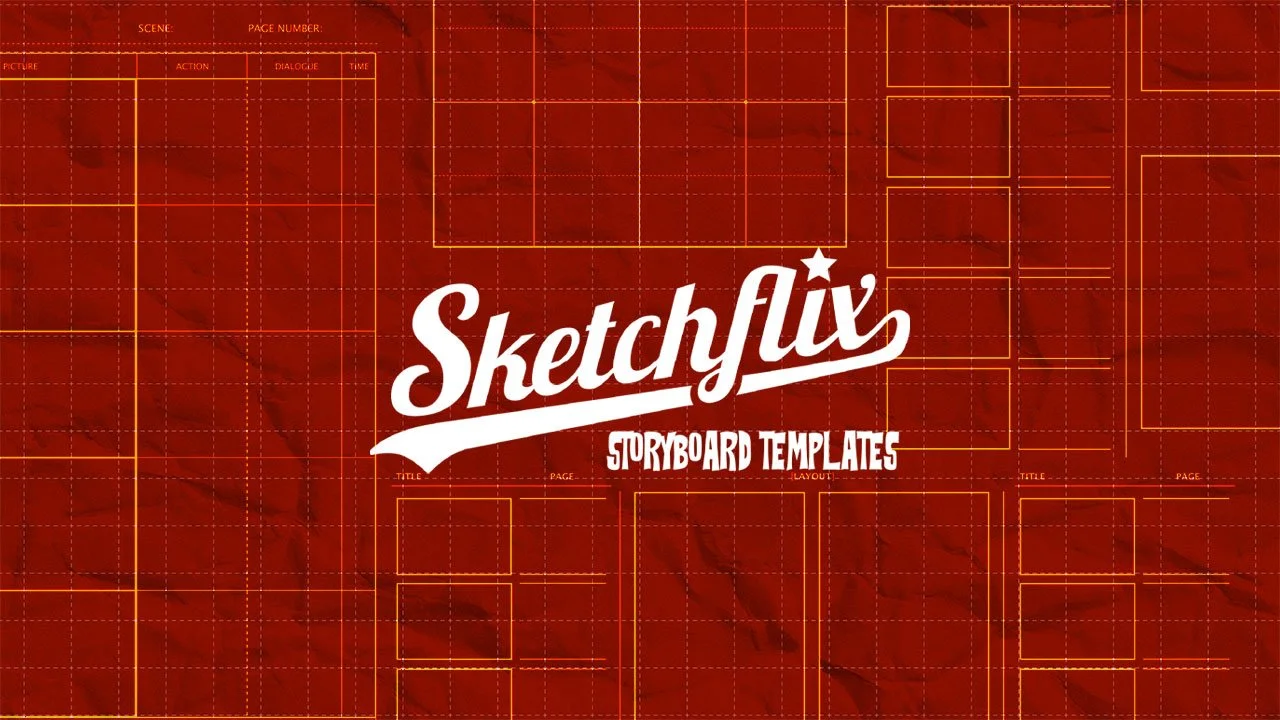
Bring your ideas to life with this collection of five clean, easy-to-use storyboard templates designed for artists, filmmakers, YouTubers, and creative storytellers.
Whether you’re planning a short film, mapping out your next YouTube video, or sketching a manga sequence, these templates give you the structure you need to move from idea to visual plan—fast.
Crafted with a director’s eye and an artist’s sensibility, each template helps you stay organized, tell clearer stories, and communicate your vision with confidence. No more messy sketchbooks or scattered notes—just a smooth, intuitive workflow that turns inspiration into production.