

The Chemistry of Conflict: How to Write Manga Romance That Hits
The biggest mistake in amateur manga romance is focusing on the "End Goal"—the confession or the kiss. If your story is just a series of "cute moments" leading to a date, your readers will get bored by Chapter 10.
In the industry, we know that Romance is the most dangerous genre. Why? Because it’s the only genre where the "Antagonist" isn't a monster or a villain—it’s the character’s own Fear of Being Seen. A great romance isn't about two people falling in love; it’s about two people surviving the terror of vulnerability.
1. The "Safety vs. Truth" Conflict
Every great romance protagonist has a "Defense Mechanism."
Maybe they use humor to keep people away.
Maybe they are a "perfect student" to avoid being criticized.
The Engine: Love is the force that threatens that defense. The "Romance" happens in the friction between their need for safety and their desire for the other person.
2. The Power of the "Quiet Panel"
In Action manga, we use speed lines. In Romance, we use Negative Space. The "Manga Romance Style" relies on the beat between the dialogue. If your characters are constantly talking, the reader can't feel the tension.
Pro Tip: Use "Environmental Storytelling." A shot of a melting ice cream cone or a flickering streetlight can say more about a character's internal "melt" than three speech bubbles of internal monologue.
3. Avoiding the "Cliche" Trap
"Accidental trips" and "sharing an umbrella" are tropes, not stories. To make your romance stand out, you need an Honest Question (from the Manga Theme Finder).
Don't ask: "Will they date?"
Ask: "Can someone love the version of me I try to hide?" or "Is the risk of being hurt worth the end of loneliness?"
The Romance Diagnostic
Is your couple just "posing" together, or is their relationship forcing them to change who they are? If you're stuck in the "Friendzone" of storytelling, you need to apply more pressure.
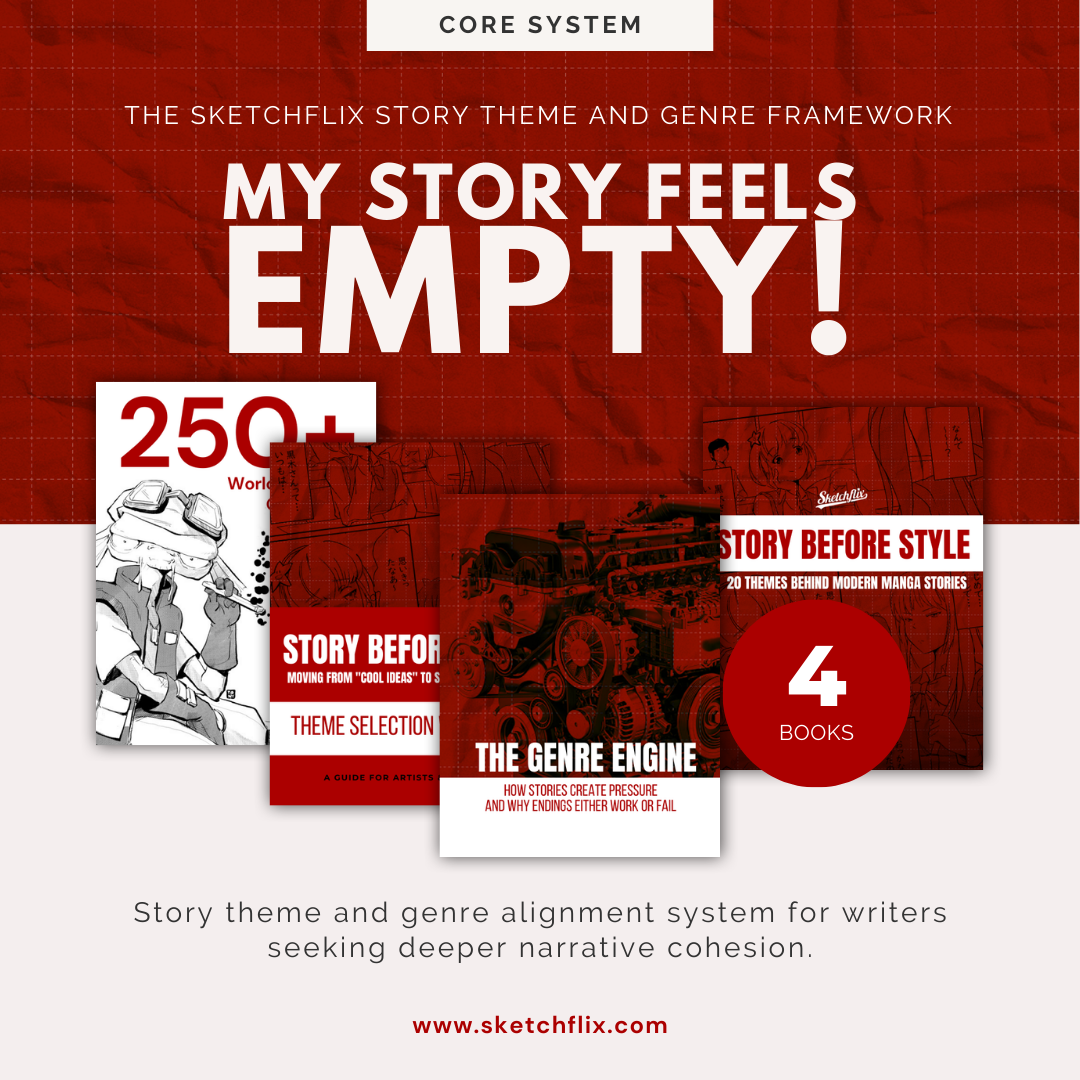
Let’s be honest: You can draw beautiful characters. You can design amazing worlds. You can even plan "cool" scenes. And yet, when you look at your pages, something feels off. The story looks right, but it doesn’t hit.
If your manga feels "hollow"—not bad, just empty—it’s because you’re fixing the wrong layer. You’re focusing on Style when you should be focusing on Pressure.