

Decoding the Kanji: How to Write Manga in Japanese (Pro Guide)
The Architecture of the Page
If you look at a Japanese manga page and a Western comic page side-by-side, they "feel" different. It’s not just the art style—it’s the Language Architecture. In English, we write horizontally, which leads to wide, short panels. In Japanese, text is vertical, which leads to tall, narrow panels. If you want to submit your work to a contest in Tokyo or even just understand the "DNA" of your favorite series, you have to understand how the Japanese language dictates the art.
1. The Vertical "Lung": Formatting Dialogue
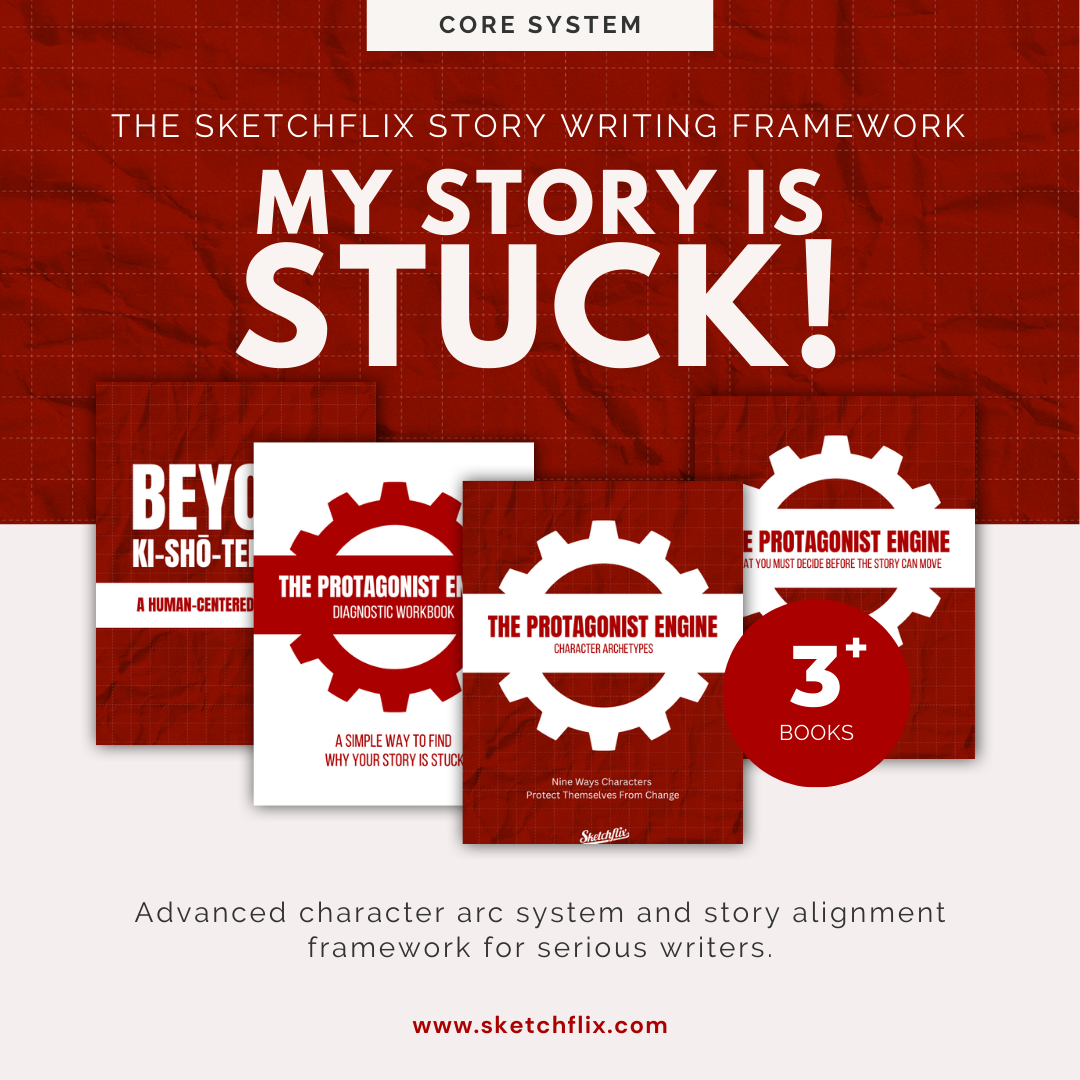
When you understand storytelling but your protagonist still refuses to transform, the issue is rarely plot.
This bundle provides the full character alignment layer: protection identification, resistance patterns, and structural pressure mapping.
Includes the Protagonist Engine framework, archetype breakdowns, story logic integration, and the Diagnostic Workbook.
Designed for serious writers who want clarity instead of hacks.
Inside, you’ll learn how to:
see what your protagonist is actually protecting
understand why pressure isn’t forcing change
recognize different resistance patterns instead of misdiagnosing them
stop rewriting scenes that are already doing what they’re designed to do
This is not a plotting system. It’s a diagnostic framework for understanding why change isn’t happening.
Japanese dialogue is written top-to-bottom, right-to-left. This creates a "Vertical Lung" effect in the speech bubbles.
The Tall Bubble: Japanese bubbles are tall ovals. If you try to put English text in a Japanese-style bubble, you get awkward hyphenation and wasted space.
The Pro Hack: When drawing for a Japanese audience (or a contest like the Tezuka Award), you must leave "Vertical Breathing Room." If your panels are too wide and flat, your vertical text will look like it’s being crushed.
2. Onomatopoeia: The Sound of the Soul
In Western comics, sound effects (SFX) are often just "BOOM" or "POW." In Japanese, SFX are divided into two categories: Giseigo (sounds made by living things) and Gitaigo (sounds that describe a state of being).
Giseigo: The "Wan Wan" of a dog or the "Gacha" of a door handle.
Gitaigo (The Secret Weapon): These are sounds for things that don't make noise. * Shin-shin: The sound of snow falling.
Zawa-zawa: The sound of an uneasy atmosphere.
The Art is the Sound: In Japanese manga, SFX are part of the drawing. They aren't just "typed" on top; they are hand-drawn to match the "Vertical Pressure" of the scene.
3. The "Kana" Hierarchy
When writing for a Japanese audience, you need to know which "alphabet" to use for the vibe of your story:
Kanji: For serious, grounded dialogue.
Hiragana: For softer, more emotional or "childlike" tones.
Katakana: For "Foreign" sounds, mechanical noises, or high-energy shouting.
The "Direct-to-Japan" Submission Checklist
If you’re planning to submit to the Shonen Jump+ portal or an international contest, your lettering needs to be "Pro Standard." You can't just use a generic font. I’ve included a guide on Japanese-standard balloon placement in the Professional Storyboarding Pack.
Bring your ideas to life with this collection of five clean, easy-to-use storyboard templates designed for artists, filmmakers, YouTubers, and creative storytellers.
Whether you’re planning a short film, mapping out your next YouTube video, or sketching a manga sequence, these templates give you the structure you need to move from idea to visual plan—fast.
Crafted with a director’s eye and an artist’s sensibility, each template helps you stay organized, tell clearer stories, and communicate your vision with confidence. No more messy sketchbooks or scattered notes—just a smooth, intuitive workflow that turns inspiration into production.